Bookkeeping
Accurate financial record-keeping that supports your decisions: we record and classify your transactions in well-kept books that meet Qatar’s commercial law and General Tax Authority requirements.
Bookkeeping
Bookkeeping is the foundation of every financial statement, every tax return and every sound management decision.
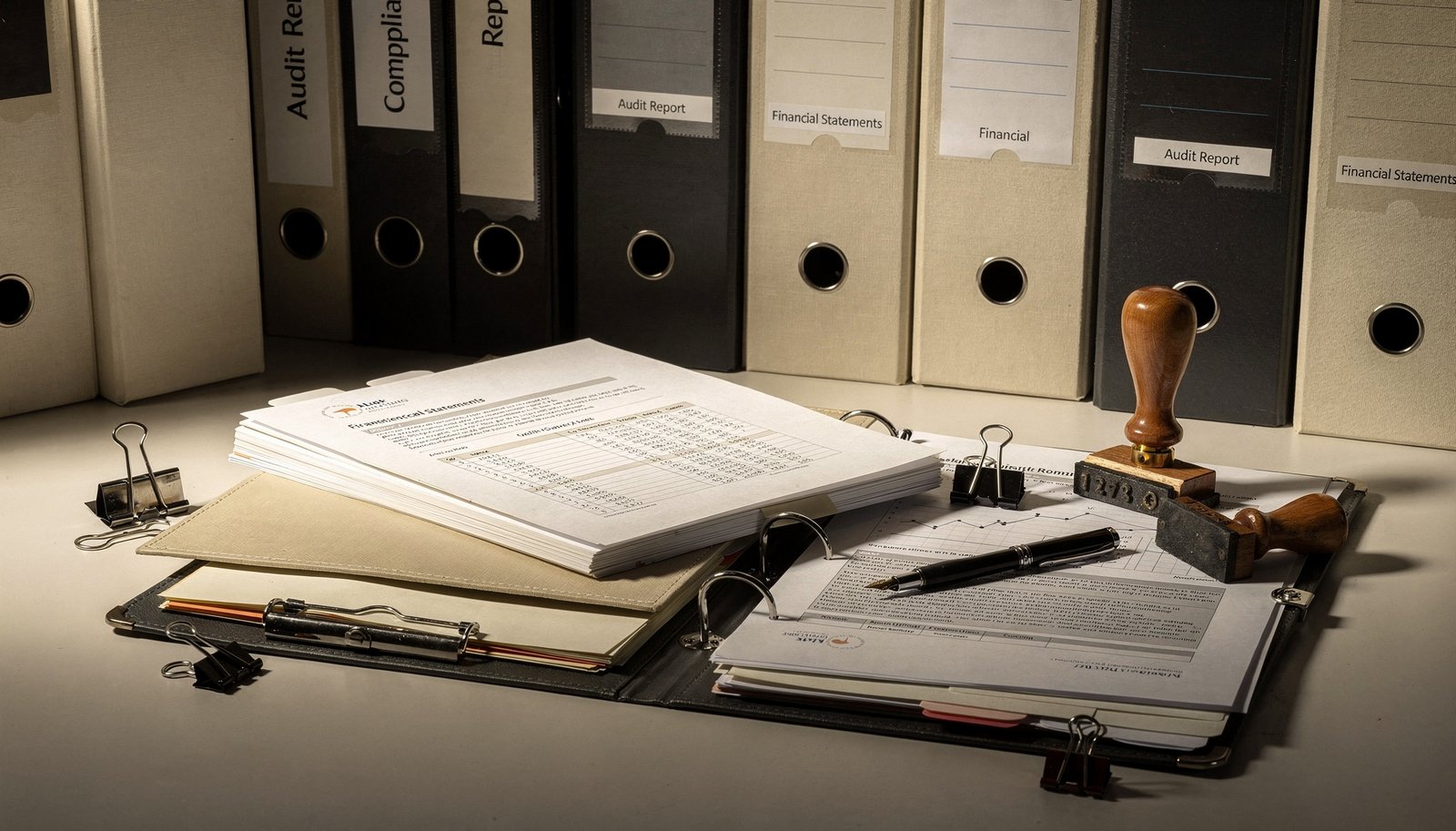
Accounting is the foundation of a company’s success, and many decisions are made on the strength of it. Bookkeeping means recording, classifying and substantiating every financial and accounting transaction in your organization from its supporting documents. A member of our professional team carries out this work in your books and your financial and accounting systems, observing the required controls and standards, so that at the end of the financial year you have financial statements showing your results, and reports that help management decide on the basis of outputs prepared to professional standards.
Forward-looking management gives bookkeeping top priority, in line with a legal principle in the State of Qatar that requires companies and institutions to keep regular accounting books recording every transaction of their economic activity. Those books are the basis for the financial statements that show the company’s financial position, for management decisions and for government requirements.
We work the way that suits you: on site at your premises, or remotely from our Doha office once we receive your documents electronically, with regular reports that keep you informed of your financial position. If you have a backlog from earlier periods, we clear it first so your books are complete, then move on to regular monthly bookkeeping.
What we deliver
01
Chart of accounts
We design a chart of accounts that reflects your activity and its cost centers, which makes classification, analysis and reporting easier later on.
02
Daily recording
We record every financial transaction of your organization in the journal in detail, linking each entry to its supporting document.
03
Posting to the ledger
We post the entries to the general ledger, grouping similar transactions in their accounts by type, and produce the trial balance.
04
Customer and supplier accounts
We follow invoices, receipts and payments and provide up-to-date balance statements and aging reports that help you collect and pay on time.
05
Bank reconciliations
We reconcile your books with your bank statements every month and clear differences and unallocated amounts before they pile up, so the cash balances in your books always match reality.
06
Stock count and inventory book
We document the inventory on hand at year end and record it, together with a copy of the balance sheet, in the inventory book as the Commercial Law requires.
07
Accurate revenue and expense data
At the end of each accounting period we present accurate revenue and expense data, the results of each project separately and the financial position of the organization as a whole.
08
Organized document filing
We file the documents and correspondence behind each entry so they are easy to retrieve throughout the legal retention period and whenever the auditor or the Authority asks.
From document to financial statement
01
Receive the document
Every entry starts with a supporting document, such as an invoice, a payment or receipt voucher or a bank statement, which we check for completeness and approval, returning anything missing a signature or detail before it is recorded.
02
Record it in the journal
We record the financial event in the journal with its date, amount and the accounts it affects, plus a clear description so any reviewer can follow it later.
03
Post it to the general ledger
We post the entries to their accounts in the general ledger and extract each account’s balance, looking into any unusual balances early.
04
Trial balance and adjustments
We prepare the trial balance and post the period-end adjustments, accruals and depreciation.
05
Reports and financial statements
We summarize the results in periodic reports and, at year end, in financial statements ready for the auditor.

Why bookkeeping matters and what Qatar requires
Qatar’s Commercial Law No. 27 of 2006 requires every trader to keep the books that the nature and size of the business call for, in a way that shows the financial position accurately, and at a minimum an original journal, a general ledger and an inventory book. All business transactions go into the journal daily and in detail; the inventory book records the goods on hand at year end and a copy of the balance sheet; and the books must be free of blank spaces, erasures and marginal notes. These books must be kept for ten years from the date they are closed, and business correspondence and documents for five years.
On the tax side, Income Tax Law No. 24 of 2018 requires anyone carrying on an activity in Qatar to keep books and records in line with Qatari law and international accounting standards, and its Executive Regulations require them to be kept at the place of business for ten years after the year they relate to. The Regulations allow bookkeeping and record-keeping to be outsourced, provided the taxpayer remains responsible for them before the General Tax Authority.
Beyond the legal obligation, bookkeeping serves owners’ short-term and long-term goals, chiefly:
- Recording every financial transaction carried out in the organization
- Classifying transactions easily to support sound decisions and safeguard the organization's funds
- A reliable basis for preparing the financial statements and tax return on time
- Being ready at any time for requests from the auditor and the General Tax Authority
FAQs about bookkeeping in Qatar
Which accounting books are mandatory in Qatar?
Commercial Law No. 27 of 2006 requires a trader to keep at least an original journal, a general ledger and an inventory book, although traders whose capital does not exceed QAR 100,000 are exempt from that minimum. The Executive Regulations of the Income Tax Law also require every taxpayer active in Qatar to keep these three books, together with the related records and supporting documents, in line with the applicable laws and accounting standards.
How long must books and documents be kept?
The Commercial Law requires the journal, ledger and inventory book to be kept for ten years from the date they are closed, and business correspondence and documents for five years. The Executive Regulations of the Income Tax Law require books, records and documents to be kept at the place of business for ten years after the year they relate to, and longer while a dispute about them is pending. We therefore advise keeping supporting documents for ten years as well.
Can the books be kept electronically?
Yes. The Executive Regulations of the Income Tax Law allow books to be kept on a computer system under certain conditions, mainly: security that prevents tampering, keeping the original supporting documents and the system’s design documentation, extracting listings of entries and accounts every three months, giving the Authority access to the records at any time within Qatar, and the auditor confirming in the audit report that the system meets accepted security and accuracy standards.
Can your office keep our books and audit them as well?
No. The Executive Regulations of the Income Tax Law do not allow anyone who took part in preparing the final accounts to audit them, and the Commercial Companies Law bars a company’s auditor from any technical, administrative or advisory work for it. If you hand your bookkeeping to us, the statutory audit is done by an independent auditor, and vice versa.
We have a backlog from previous years. Can it be fixed?
Yes. We rebuild the entries from the invoices, bank statements and contracts available, reconcile the balances year by year until the books are complete enough to prepare financial statements, and then keep them up to date every month. The time needed depends on the volume of transactions and how complete the documents are.
How much does monthly bookkeeping cost?
Fees depend on the number of monthly transactions and bank accounts, whether you hold inventory or have branches, and how often you need reports. We first review a sample of your documents, then send you a clear quote.
Need advice on bookkeeping?
Our team is here to help. Contact us now to discuss your company’s needs and receive a tailored proposal.