
Cost Accounting
Precise cost analysis that supports decisions and improves performance
What is
Cost Accounting?
Cost accounting is one of the branches of accounting, aimed at enabling a company to determine the results of its operations over a defined period. It focuses on recording the full, aggregate production costs across the company by compiling data on cost elements drawn from various documents and notices relating to material usage costs, labor costs, and the costs of purchasing or producing the services needed for different business activities.
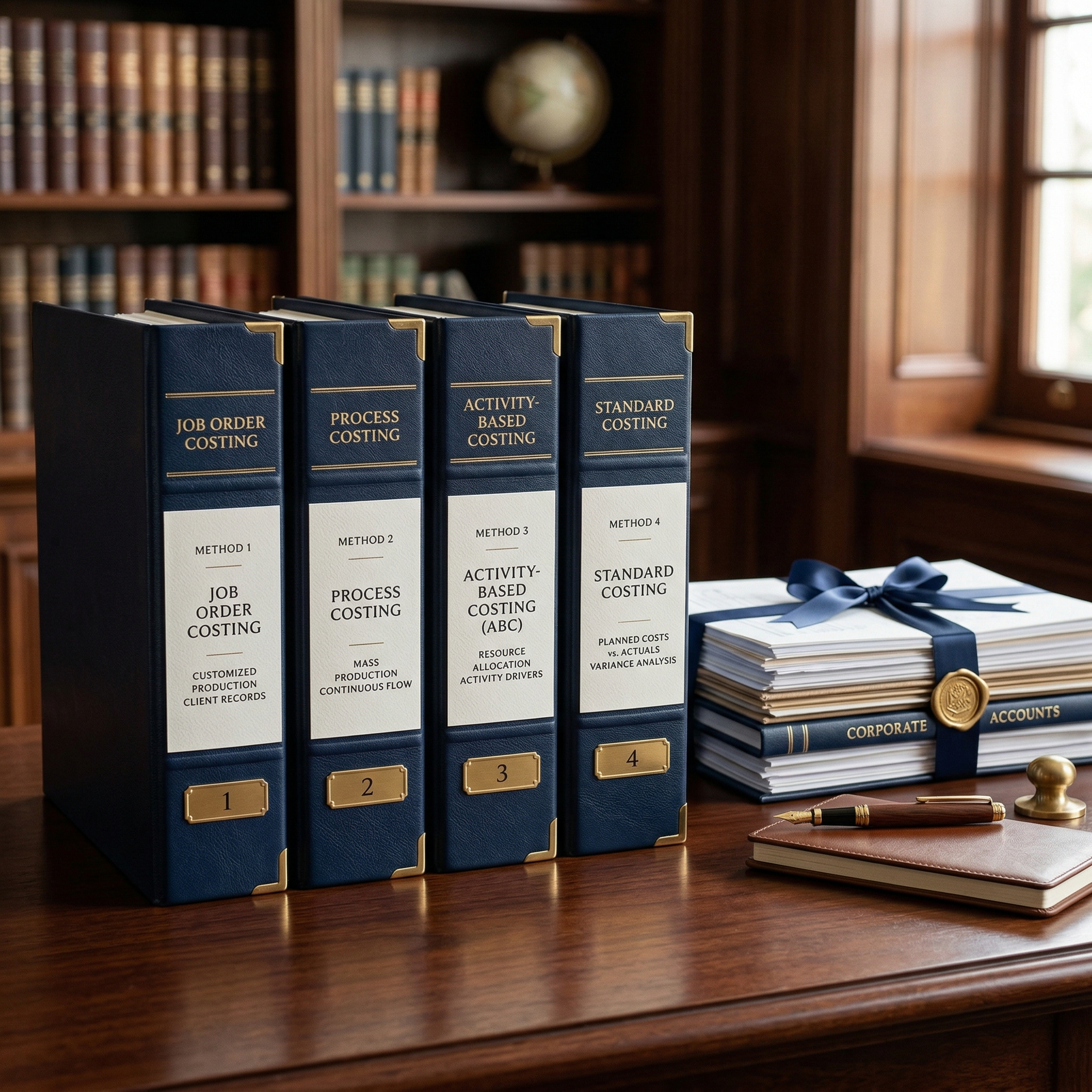
Types of Cost Accounting
Cost accounting includes several main methods used by organizations depending on the nature of their activity and their financial analysis objectives.
Activity-based costing: tracks resource consumption and allocates costs to activities and products more precisely than traditional methods, helping to understand the cost of each product or service more accurately.
Standard costing: sets a predetermined cost for each production unit (the standard cost), then compares it to the actual cost to identify variances and analyze their causes, helping to control and improve costs.
Flexible budgeting: prepares budgets that reflect changing costs as activity or production levels change, offering flexibility in financial planning and helping evaluate performance more effectively.
Marginal costing: focuses only on the variable costs of a product, and is used to calculate the contribution margin (revenue minus variable costs). It is used in decisions such as pricing or accepting special orders.
Importance for Companies
- Decision-Making: Provides managers with accurate information for strategic decisions on pricing, optimizing the product mix, and managing resources efficiently.
- Cost Control: Enables management to monitor costs and reduce waste, leading to increased profits.
- Performance Improvement: Helps measure a company’s financial performance, identify areas for improvement, and guide efficiency efforts.
Direct and Indirect Costs
Direct costs are a type of cost specifically related to the production process of a particular, specific product, determined by the time period involved and the financial cost required for the product to ultimately reach the desired outcome.
Indirect costs are costs that cannot be directly linked to a product and its production process — arising from the effort workers put in over the time needed to reach the final required results. Indirect costs are considered imprecise, and it is difficult to identify the individual consumption involved in the production process.